Slope protection nets are important facilities for ensuring the stability of slopes such as mountains and highways. Different types of protection nets have different functions and applicable scenarios. Today, we will provide a detailed introduction to several common slope protection nets to help everyone better understand their characteristics.
1. Active protective net: more proactive in preventing landslides
Active protective nets mainly reinforce and protect slopes through components such as anchor rods and steel wire rope nets. It can effectively intercept slope rockfall and prevent the occurrence of small landslides. This type of protective net is usually installed on the surface of the slope, suitable for slopes with gentle slopes and low levels of rock weathering. For example, active protective nets are commonly used on slopes along mountain roads to reduce the threat of falling rocks to vehicles and pedestrians.
2. Passive protective net: intercepting falling rocks is more reliable
The passive protective net is like a “safety wall”, passively receiving and buffering the impact force of falling rocks through structures such as circular nets and wire rope nets. It is suitable for areas with steep slopes and high risk of rockfall, such as mine slopes and steep mountain ranges. Passive protective nets can effectively reduce the damage of falling rocks to buildings and roads below, and are a common protective choice in large-scale projects.
3. Flexible protective net: more flexible to adapt to terrain
Flexible protective nets are known for their excellent flexibility, which can adapt to different terrain conditions, especially suitable for slopes with complex terrain and large slope undulations. It can fix the slope soil and prevent soil erosion caused by rainwater erosion to a certain extent through a combination structure such as grid mesh and steel wire rope mesh. In some ecological restoration projects, flexible protective nets are often used to protect slope vegetation and achieve a combination of protection and greening.
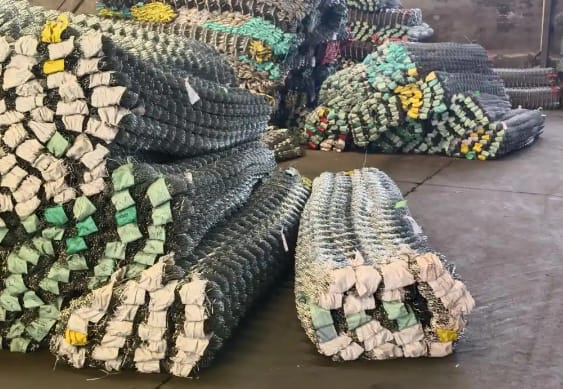
4. Circular protective net: Outstanding impact resistance performance
The circular protective net is woven with high-strength steel wire buckles and has excellent impact resistance and corrosion resistance. It is mainly used in high-energy rockfall areas, such as quarries, railway lines, etc. The circular protective net can effectively disperse the impact force of falling rocks, reduce the damage of falling rocks to the protective structure and underlying facilities, and is an ideal choice for heavy-duty falling rock protection.
5. Grille protective net: balancing protection and drainage
Grille protective nets are usually composed of wire grilles and anchor rods, with a relatively simple structure and low cost. It is mainly used to prevent small stones from rolling and soil loss, while allowing rainwater to penetrate smoothly and reducing slope water pressure. In some slopes that are sensitive to protection costs and have small rockfall scales, such as small mountains next to rural roads, grid protection nets are an economical and practical choice.
Choosing a suitable slope protection net requires comprehensive consideration of factors such as slope geological conditions, rockfall risk level, and protection budget. I hope the above content can help everyone understand the characteristics and applicable scenarios of different protective nets more clearly, and provide reference for relevant engineering decisions. In practical applications, it is necessary to combine the survey results of specific projects and have professional personnel design protection plans to ensure the safety and reliability of slope protection.