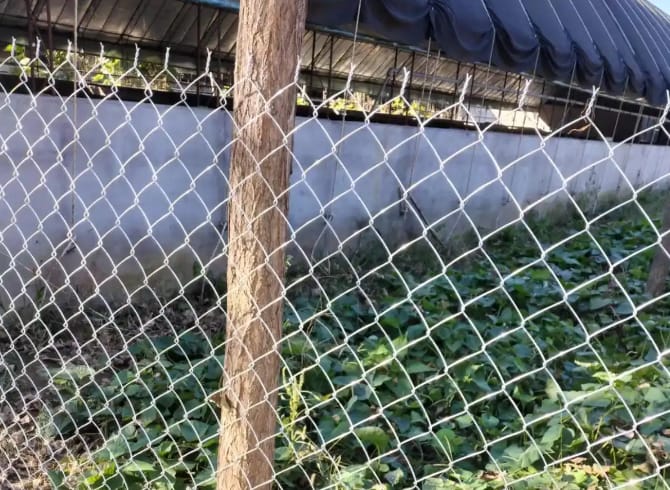
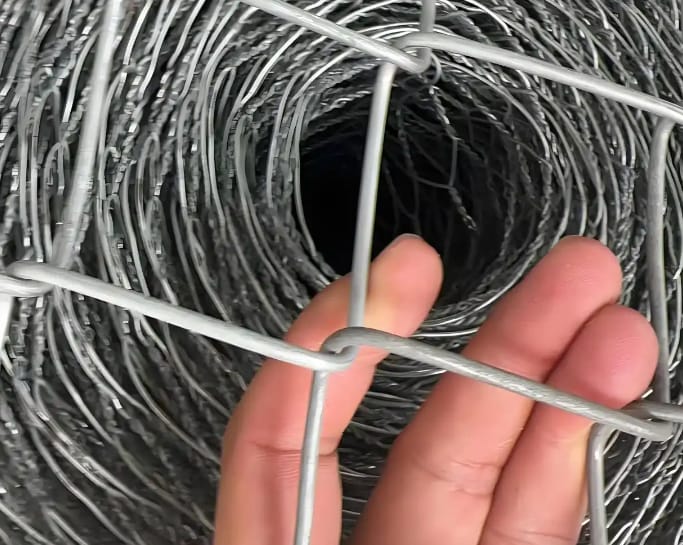
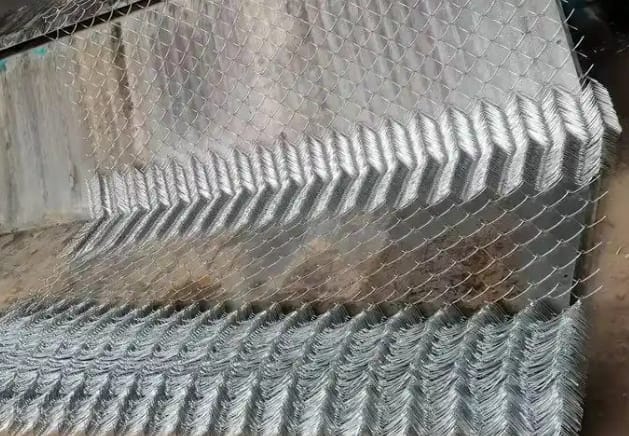
As a common isolation facility, mesh fences are widely used in fields such as agriculture, transportation, and security. Reasonable structural design can ensure its stability and practicality. Today, let’s talk about the core design characteristics of mesh fences.
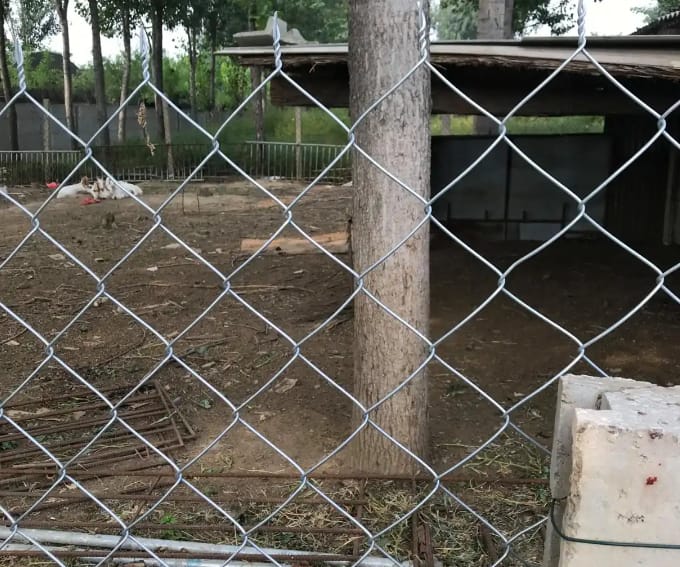
1. Framework structure: the foundation of stability
Mainstream fence structures often use metal frame structures, with columns and crossbars connected by welding or bolts. The columns are usually made of square or round tubes, with a height ranging from 1 meter to 3 meters according to the scene requirements. The spacing between horizontal bars is generally 15-30 centimeters, forming a stable support system that can effectively resist external impact.
2. Mesh design: Balancing protection and transparency
Mesh is the core protective part of a mesh fence, and common types include:
Welded mesh: The welding points are firm, the aperture is uniform, and it is suitable for aquaculture isolation
Hook net: Good flexibility, stretch resistance, commonly used for slope protection
Dutch website: Low cost, strong breathability, preferred for agricultural fences
The edges of the mesh are usually rolled or wrapped to avoid sharp edge scratches.
3. Connection method: key to installation and durability
The connection method of the fence directly affects installation efficiency and service life:
Buckle connection: quick installation, suitable for temporary or mobile scenarios
Bolt fixation: firm and reliable, often used for permanent fences

Welding process: Strong overall integrity, but difficult to repair and replace
Some high-end products use hot-dip galvanizing technology, which can effectively prevent rust and extend their service life.
4. Functional details: Scenario based design considerations
Different scenarios have special requirements for mesh fences:
Farm fence: anti climbing spikes or barriers are often installed at the bottom
Highway guardrail: The mesh height is relatively low (usually 1.2 meters), making it easy for vehicles to observe
Military area: Adopting a double-layer mesh design with a barbed wire rolling cage in the middle
Some products will also add reflective strips to enhance nighttime safety.
5. Economic practicality: optimization of materials and costs
The design of mesh fences needs to balance cost and performance:
Low carbon steel wire: Low cost, suitable for ordinary scenarios
Stainless steel mesh: corrosion-resistant, suitable for high humidity environments such as seaside
Aluminum alloy frame: lightweight and beautiful, often used in scenic spots or municipal engineering
Reasonable selection of materials can reduce long-term usage costs by more than 30%.
The design of mesh fences needs to be combined with specific usage scenarios, finding a balance between protection, installation efficiency, and durability. Whether it’s farmland enclosure or highway isolation, scientific structural design is the foundation for ensuring safety.